
Private Limited Company Registration Online in India
We help you register your private limited company online: from name reservation and DIN to your Certificate of Incorporation, PAN and TAN, with government fees charged on actuals.
@Rs.1499 + (Govt fees on actuals)
Get Free Consultation
What Our Company Incorporation Assistance Includes
Company Name Reservation Assistance
Assistance with DIN Applications
Digital Signature Certificate (DSC) Assistance
Assistance with Preparation and Filing of e-MOA and e-AOA
Delivery of Certificate of Incorporation
PF and ESI Registration Assistance
PAN and TAN Application Assistance
CA ASSISTANCE
Professional Tax Registration Assistance
*Contact our team for discounts & offers
Private Limited Company Registration Assistance
Govt. fees on actuals
Mon – Sat 10:00am – 7:00pm
Confidentiality agreements
Regular updates
What Our Company Incorporation Assistance Includes
@Rs.1499 + (Govt fees on actuals)
- Company Name Reservation Assistance
- Assistance with DIN Applications
- Digital Signature Certificate (DSC) Assistance
- Assistance with Preparation and Filing of e-MOA and e-AOA
- Delivery of Certificate of Incorporation
- PF and ESI Registration Assistance
- PAN and TAN Application Assistance
- CA ASSISTANCE
- Professional Tax Registration Assistance
*Contact our team for discounts & offers
Depending on turnover and the kind of supplies, the new company may also need to register for GST.
How private limited company registration works with Complianto

Step-1
FILL FORM

Step-2
DISCUSS WITH OUR EXPERTS

Step-3
SHARE DOCUMENTS

Step-4
DELIVERY OF CERTIFICATE
Step-1
FILL FORM
Step-2
DISCUSS WITH OUR EXPERTS
Step-3
SHARE DOCUMENTS
Step-4
DELIVERY OF CERTIFICATE
What is a private limited company?
A private limited company is a company registered with the Ministry of Corporate Affairs (MCA) under the Companies Act, 2013. On incorporation it becomes a body corporate with perpetual succession. It can own property, enter into contracts, and sue and be sued in its own name, separately from the people who own and run it.
Its owners are its shareholders (members), and the people who manage it are its directors. In a small company these are often the same people. In a company limited by shares, a member's liability is limited to the amount, if any, unpaid on the shares they hold.
The Companies Act describes a private company as one whose articles restrict the right to transfer its shares and, except for a One Person Company, limit its members to two hundred. It also cannot invite the public to subscribe to its securities. Its name must end with the words "Private Limited".
A private limited company suits founders who plan to bring in investors, who start with one or more co-founders, or whose clients and lenders expect a registered company.

Requirements for registering a private limited company
| Requirement | What the law says |
|---|---|
| Founders | At least two persons can form a private company. |
| Directors | At least two directors and at most fifteen; more than fifteen needs a special resolution. |
| Resident director | At least one director must stay in India for a total of 182 days or more during the financial year. A newly incorporated company has a proportionate requirement. |
| Members | Up to two hundred, as limited by the articles. The same people can be directors and shareholders. |
| Share capital | No minimum paid-up capital is required by law. The requirement was removed in 2015. |
| Name | Must end with "Private Limited". It must not be identical or too similar to an existing company or LLP name. |
| Registered office | Every company must have a registered office that can receive communications. Verification is filed within 30 days of incorporation if it was not given at incorporation. |
If you are starting alone, a One Person Company lets a single person incorporate.
Private limited company registration fees
The cost has two parts: government charges, set by law, and our professional fee for the assistance.
| Government charge | Amount |
|---|---|
| SPICe+ filing fee, authorised capital up to ₹15,00,000 | Nil ("zero filing fee") |
| SPICe+ filing fee, authorised capital above ₹15,00,000 | As per the MCA fee schedule, calculated on the portal |
| Stamp duty on the MoA and AoA | Depends on the state of the registered office and, in many states, the authorised capital. Calculated by the MCA portal. |
Professional fee: @Rs.1499 + (Govt fees on actuals)
*Contact our team for discounts & offers
How long does registration take?
For private limited company registration process ,time can vary depending on the jurisdiction and the efficiency of the registration process. In general, the registration process involves several steps that may include name reservation, preparation of company documents, filing of the necessary forms, and obtaining the required approvals.
What you receive
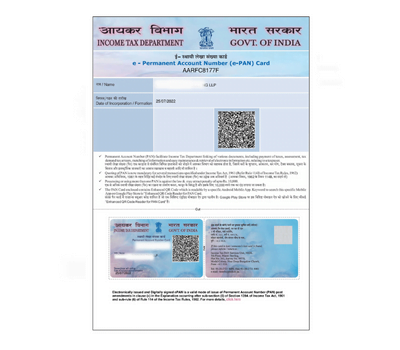
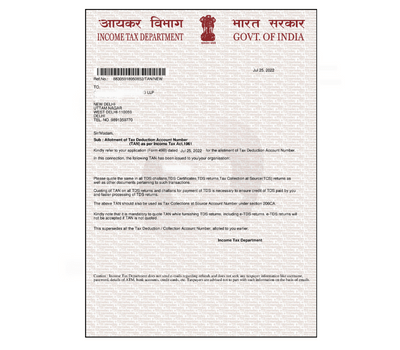
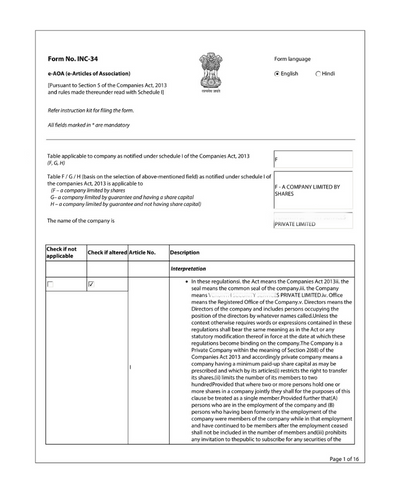
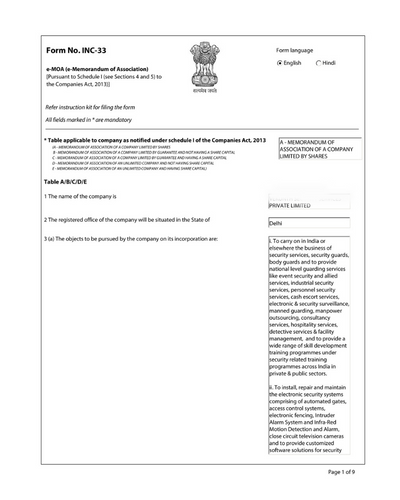
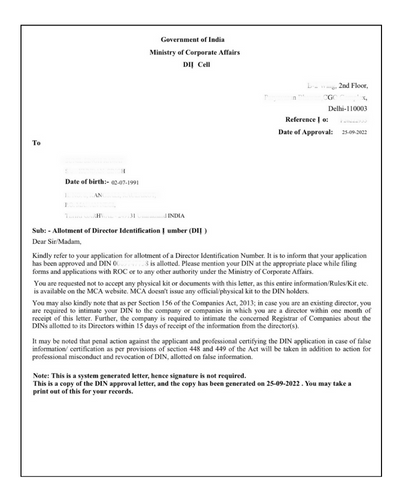
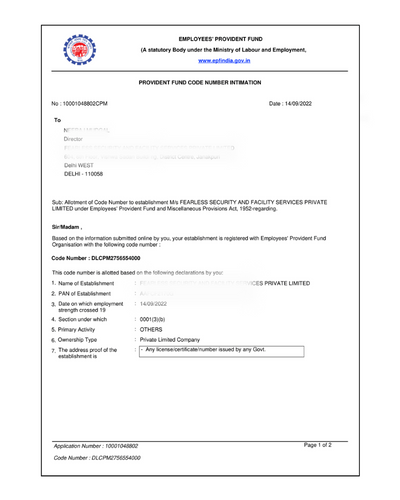
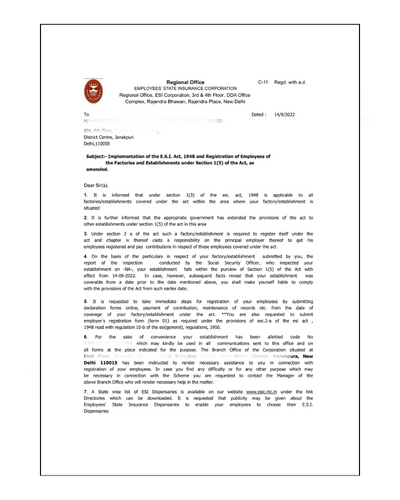
Below are all Sample Certificates for Illustrative Purposes Only. Final documents are issued by the respective government authorities.
- Incorporation Certificate
- Permanent Account Number (PAN)
- Tax Deduction Account Number (TAN)
- Articles of Association (AoA)
- Memorandum of Association (MoA)
- Director Identification Number (DIN)
- Provident Fund Registration (PF)
- Employee State Insurance Registration (ESI)
- Digital Signature Certificate (DSC)
- CA/CS Assistance


Your Corporate Identity Number (CIN)
On incorporation, the Registrar allots your company a Corporate Identity Number. It is a distinct identity for the company and is printed on its Certificate of Incorporation. You will quote it on company letterheads, invoices and filings.
How to register a private limited company: the MCA process
Incorporation is done online on the MCA portal through the SPICe+ form and its linked forms. Applications are processed by the Central Registration Centre (CRC).
Get help from our Experts for your Company Registration!
- Step 1 - Digital Signature Certificate (DSC)
- Step 2 - Name reservation (SPICe+ Part A)
- Step 3 - SPICe+ Part B (INC-32)
- Step 4 - e-MoA (INC-33) and e-AoA (INC-34)
- Step 5 - AGILE-PRO-S
- Step 6 - Certificate of Incorporation
Digital Signature Certificate (DSC)
Every proposed director needs a digital signature certificate before the forms can be signed.
Name reservation (SPICe+ Part A)
Proposed names are applied for in SPICe+ Part A. The CRC approves one, which is reserved for 20 days from the date of approval. You can check availability first on the MCA's company and LLP name search.
The name should reflect your business and must not be similar or identical to an existing company or LLP, or to a registered trademark. To protect the name beyond the company register, you can file a trademark application for it.
SPICe+ Part B (INC-32)
This carries:
• the registered office details;
• the authorised and paid-up share capital;
• the details of directors and subscribers;
• the details needed for the company's PAN and TAN.
e-MoA (INC-33) and e-AoA (INC-34)
The Memorandum of Association states the company's name, the state of its registered office, its objects, its capital and its subscribers. The Articles of Association set out how the company is run. Both are filed with SPICe+ Part B.
AGILE-PRO-S
This linked form is mandatory with SPICe+ Part B. It covers EPFO registration, ESIC registration, the opening of the company's bank account and, in Maharashtra, Karnataka and West Bengal, professional tax registration. GSTIN and Shops and Establishments registration (in notified locations) are optional. It is signed by the same director who signs SPICe+ Part B.
Certificate of Incorporation
Once the application is approved, the Registrar issues the Certificate of Incorporation and allots the company a Corporate Identity Number (CIN), which is printed on the certificate. Once the company is incorporated, it has yearly ROC filings to keep up with.
Documents required for private limited company registration
Keep these ready for every director and shareholder. Our team checks them before anything is filed.
- Director's photo
- Director's PAN, Aadhaar and voter ID (or passport or driving licence)
- Latest bank statement showing the current address
- Rent agreement or ownership proof for the registered office
- Latest electricity bill (or another utility bill) for the registered office
- No-objection certificate (NOC) from the property owner
- Digital Signature Certificate (DSC) of each director
- Director Identification Number (DIN), if a proposed director already has one
- For NRI or foreign directors: passport and overseas address proof
Our document checklist
These are our own checks to avoid queries from the registry.
- Minimum two shareholders and two directors; at least one director must be resident in India (182 days or more in the financial year).
- There is no minimum capital required by law. The authorised and paid-up capital you choose affects stamp duty.
- One witness for the MoA and AoA subscribers.
- All KYC documents should be self-attested, and the electricity or telephone bill and bank statement should not be more than 30 days old.
- The rent agreement should be in the name of the proposed director only (a rent agreement in the name of the proposed company is not accepted).
- The rent agreement should have witnesses and the director's KYC as part of the agreement, and be notarised.
Benefits of a private limited company
A private limited company offers these advantages over a proprietorship or an ordinary partnership firm. Two or more partners who prefer a partnership-style structure can also look at registering a Limited Liability Partnership.
A separate legal entity
The company is a body corporate with perpetual succession. Contracts, property and bank accounts stay with the company when directors or shareholders change.
Limited liability
A shareholder's liability is limited to the amount, if any, unpaid on their shares, so personal assets are protected if the business fails. In a proprietorship or an ordinary partnership firm, personal assets can be used to pay business debts.
Credibility
Company filings are public and regulated, so clients, banks, vendors and investors often prefer to deal with a registered company.
Easier to raise funds
A company can issue shares to investors, which a partnership firm or LLP cannot do in the same way. Eligible new companies can apply for Startup India (DPIIT) recognition.
Room to grow
Access to capital and the trust that comes with formal registration make it easier to expand.
The first months after registration
| When | What | Law |
|---|---|---|
| Within 30 days of incorporation | Hold the first board meeting | Companies Act s.173(1) |
| Within 30 days of registration | The board appoints the first auditor | s.139(6) |
| Within 30 days of incorporation | Verify the registered office with the Registrar (if not already given) | s.12(2) |
| Within 2 months of incorporation | Deliver share certificates to the subscribers | s.56(4)(a) |
| Within 180 days of incorporation | A director files the declaration that every subscriber has paid for their shares (with the registered-office verification). Until then, the company cannot commence business or exercise borrowing powers. | s.10A(1) |
| From the start | Keep books of account at the registered office | s.128(1) |
| Every year | Board meetings, the annual general meeting, annual filings and the income tax return | – |
Common mistakes that delay registration
- Choosing a name close to an existing company or brand. Search the MCA name list first.
- Old address proof. Bills or statements older than our checklist allows usually lead to a query.
- Names spelt differently across IDs. A PAN and an Aadhaar that don't match can hold up the DSC or DIN. Correct one first.
- No NOC from the property owner, common when the office is a family member's home.
- Authorised capital higher than needed, which raises stamp duty and, above ₹15,00,000, the MCA filing fee.
- A vague main object. The object clause should describe the business you will actually run.
- Missing the 180-day declaration. Without it, the company cannot start business or borrow.

Private limited company registration explained
At Complianto Consulting, our experts are committed to guide you on the right form of Company Registration
Why choose Complianto for private limited company registration
ACCESSIBILITY
We provide convenient communication channels for clients to reach out and get support when needed.

Transparent Pricing
We offer transparent and affordable pricing, without any hidden fees or charges, making it easier for clients to budget and plan. (Govt. fees charge on actuals)

Confidentiality
Our services will be executed through confidentiality agreements . Your company’s information and trademarks will be kept secret with us

Expertise
We have a team of qualified and experienced professionals who can provide high-quality financial and business advisory services to clients.

Personalized Services
Our Service solutions can be tailored to the unique needs of each client, rather than a one-size-fits-all approach.

Prompt Response
We provide regular updates and proactive communication to clients, keeping them informed and involved in the decision-making process.
Related services
Private limited company registration: frequently asked questions
For private limited company registration process ,time can vary depending on the jurisdiction and the efficiency of the registration process. In general, the registration process involves several steps that may include name reservation, preparation of company documents, filing of the necessary forms, and obtaining the required approvals.
At least two directors and two shareholders; the same people can hold both roles. At least one director must stay in India for 182 days or more during the financial year.
There is no minimum paid-up capital required by law. Choose an authorised capital that suits your plans; a higher figure raises stamp duty and, above ₹15,00,000, the MCA filing fee.
Yes. Every company must have a registered office that can receive communications. Its verification is filed within 30 days of incorporation if it was not given at incorporation. The company keeps its books of account at its registered office.
Choose a name that reflects your business, is easy to remember, and is not identical or similar to an existing company, LLP or registered trademark. Check the MCA's company and LLP name search first. An approved name is reserved for 20 days.
Yes. They need a DIN and identity and address documents, and the company must still have at least one director resident in India for 182 days or more in the financial year.
Our professional fee is @Rs.1499 + (Govt fees on actuals). The government charges include the stamp duty for your state and, above ₹15,00,000 authorised capital, the SPICe+ filing fee.
GST is a separate registration. You can opt for a GSTIN in the AGILE-PRO-S form during incorporation, or apply later.
A director files a declaration that every subscriber has paid for their shares, along with the verification of the registered office. Until it is filed, the company cannot commence business or borrow.
Yes. It is a body corporate with perpetual succession, so it continues when shareholders or directors change.
Yes. After extinguishing all its liabilities, a company can, by a special resolution or with the consent of 75% of members by paid-up share capital, apply to the Registrar to remove its name from the register.
Its financial statements and annual return, along with board meetings, the annual general meeting and the income tax return.
Neither. Complianto is a compliance facilitation platform operated by Mentorcorp Private Limited. You can also apply directly on the MCA portal without our fee.
You manage business, we manage your compliances
Our team is constantly working towards the highest level of compliance solutions for you.
GET FREE CONSULTATION

Complianto (complianto.in), operated by Mentorcorp Private Limited, is a private consultancy and is not affiliated with any government body. We do not issue official documents. We charge a professional fee for application assistance and advisory services. Applicants can apply directly to the government without our fees via the official portals: MCA (mca.gov.in), Income Tax (incometax.gov.in), GST (gst.gov.in), MSME (udyamregistration.gov.in), FSSAI (foscos.fssai.gov.in), Startup India (startupindia.gov.in), and IP India (ipindia.gov.in).
Copyright @ MENTORCORP PRIVATE LIMITED. All rights reserved